
As the pace of technological and social change accelerates, some of the most important questions about our future are no longer being asked within a single discipline. Increasingly, they emerge at the intersection of technology, science, art, and society.
Ahead of the 2026 TPF Innovation & Social Impact Summit, we spoke with the Summit’s leadership about what makes this gathering distinctive, why these conversations matter now, and what participants can expect from a day designed for reflection, dialogue, and cross-sector exchange.
The Summit features voices from technology, science, philanthropy, and the arts. How did you think about curating the speakers?
Ayşegül İldeniz: For the lineup, we focused on folks who are actively innovating in their own fields and impacting how society is shaping. We invited folks who are mavericks in their field to building tomorrow.
The biggest changes are coming through work across disciplines. Bringing voices from different fields allows conversations to move toward broader questions about responsibility, impact, and the future we are designing. Artificial intelligence is affecting creativity, biotechnology influences public health systems, and philanthropy increasingly engages with all systems. We hope you will get a glimpse of how they are tackling the future.
The first Summit in 2024 sparked strong dialogue. How will this year’s gathering build on that experience?
Zeynep Bilimer: The 2024 Summit showed us that there is real appetite for conversations that cut across sectors. For 2026, we wanted to create even more opportunities for meaningful dialogue.
So the format places greater emphasis on exchange: smaller conversations, opportunities for participants to engage with speakers, and moments where ideas can be explored together rather than simply presented. The intention is not only to inspire new thinking but also to allow participants to reflect on how these ideas might translate into real-world work.
One example is the networking lunch, which is designed around curated tables organized by themes connected to the Summit’s discussions. Each table brings together participants who share an interest in areas such as AI and society, biotechnology and wellbeing, creativity in the age of machines, or the role of capital and philanthropy in shaping responsible innovation.
Rather than being a traditional networking break, the lunch becomes another space for dialogue, a chance for participants to exchange perspectives, explore collaborations, and continue the conversation in a more informal but still intentional setting.
Some of the themes, such as AI and human collaboration or biotechnology and equity, return this year. Why revisit them?
Ülkü Rowe: Because these are not conversations that can happen only once. The pace of change is simply too fast.
Each year brings new developments in technology, new ethical questions, and new perspectives on how these systems influence society. Revisiting these topics with different voices allows us to deepen the conversation and examine how ideas are evolving over time. It’s less about repeating themes and more about continuing the dialogue as the landscape shifts.
We’re living through a period of extraordinary technological change. Why is this the right moment to bring leaders from different fields together to reflect on innovation and its impact?
Didem Altop: We are at a moment when technological progress is moving faster than our ability to fully understand its societal implications. Artificial intelligence, biotechnology, and digital platforms are reshaping how we work, create, and interact with one another. These developments are incredibly exciting, but they also raise important questions about responsibility, governance, and long-term impact.
No single field can answer those questions alone. Technologists may understand the capabilities of new systems, scientists may understand their broader implications, entrepreneurs may see how they scale, and philanthropists may think about their social consequences. Bringing those perspectives together creates a much richer conversation.
That is why gatherings like this matter. They create space not only to talk about what innovation can do, but also to reflect on what it should do, and how different sectors can work together to ensure that progress benefits society as a whole.
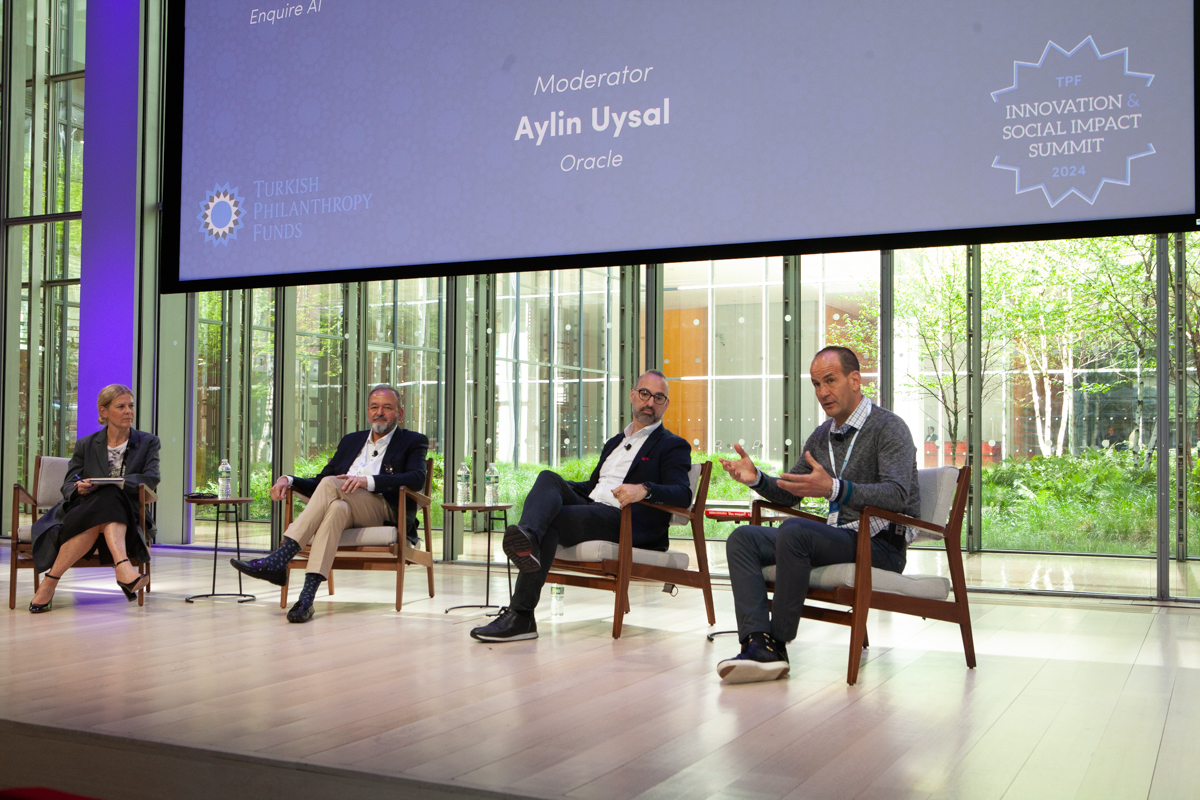
Who do you imagine being in the room at the Summit?
Senay Ataselim Yılmaz: One of the things we care about most is the composition of the room. The Summit brings together founders, executives, investors, academics, and social innovators, people who are directly shaping decisions in their fields.
But it also includes younger participants and students, because the future we’re discussing ultimately belongs to them. The goal is to create an environment where different generations and perspectives can interact. When that happens, conversations become richer and often lead to unexpected insights.
Is there a session or conversation you are personally looking forward to?
Ayşegül İldeniz: I’m particularly looking forward to the conversations around Innovation. I’ll be speaking with Hanzade Doğan and Gökhan Hotamışlıgil, both of whom approach innovation from very different but complementary perspectives.
What excites me about these discussions is that they move beyond abstract ideas. They explore how leadership, science, and technology can expand opportunity, wellbeing, and possibility for people. Ultimately, innovation matters most when it creates the conditions for others to thrive.
Ülkü Rowe: I’m particularly looking forward to the conversation on Creativity in the Age of AI. I might be biased as it is the session I will be moderating. It’s a fascinating moment because technology is not only transforming industries, it is also reshaping how we think about creativity, authorship, and human expression.
What makes this session exciting is the diversity of perspectives in the room. We’ll have artists, technologists, and cultural creators discussing how human imagination and machine capabilities interact. Rather than framing it as a competition between humans and technology, the conversation explores how collaboration between the two can open entirely new forms of storytelling, art, and design.
For me, the most interesting question is not whether AI can create, but how human creativity evolves when new tools expand what is possible. Those intersections often reveal something deeper about both technology and ourselves.
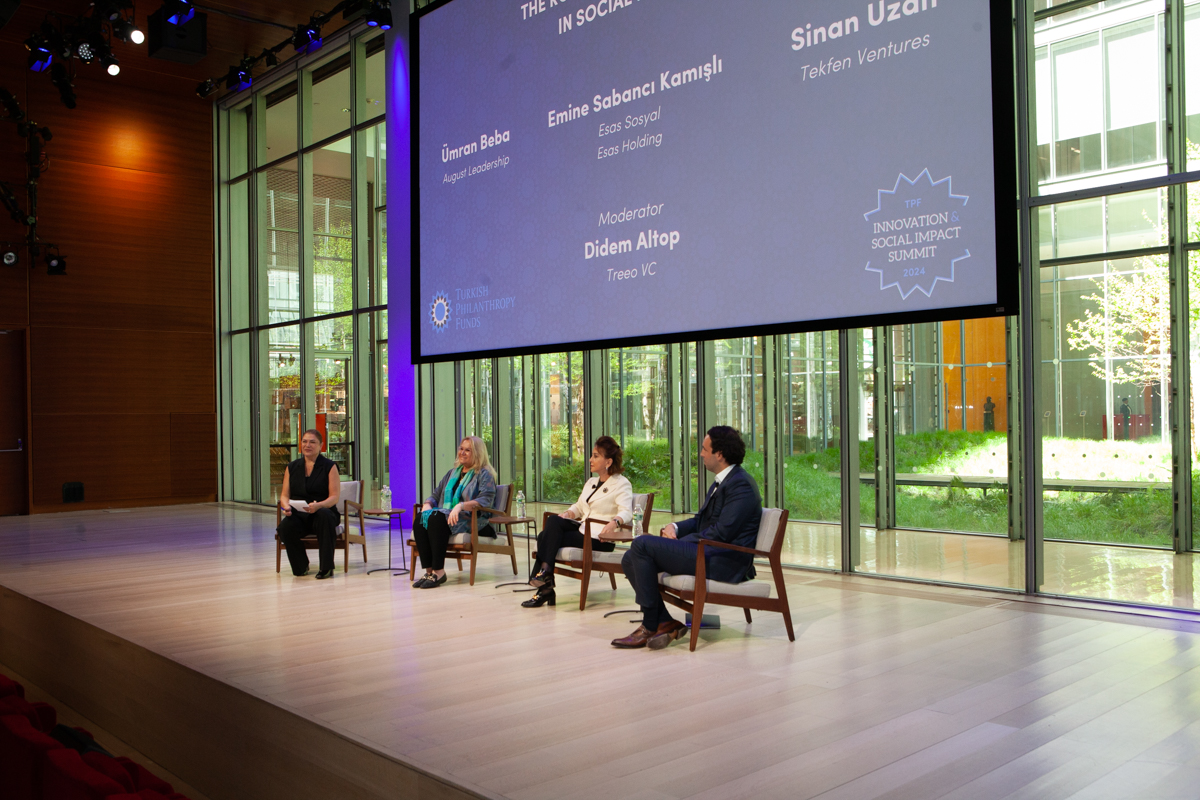
The Summit also includes conversations about capital and philanthropy. Why is that an important part of the dialogue?
Zeynep Bilimer: Innovation doesn’t happen in a vacuum. Behind every breakthrough there are systems of support: capital, institutions, and communities that make it possible.
What I find particularly interesting today is how philanthropy and investment are increasingly intersecting. We are seeing more leaders think not only about financial return, but also about long-term societal impact. That shift opens up new possibilities for how resources can be deployed to support innovation that is both ambitious and responsible.
The conversation we are having at the Summit is really about how capital can help enable ideas that serve society, whether through entrepreneurship, scientific discovery, or social innovation.
The Summit also includes conversations about capital and philanthropy. Why is that an important part of the dialogue?
Zeynep Bilimer: Innovation doesn’t happen in a vacuum. Behind every breakthrough there are systems of support: capital, institutions, and communities that make it possible.
What I find particularly interesting today is how philanthropy and investment are increasingly intersecting. We are seeing more leaders think not only about financial return, but also about long-term societal impact. That shift opens up new possibilities for how resources can be deployed to support innovation that is both ambitious and responsible.
The conversation we are having at the Summit is really about how capital can help enable ideas that serve society, whether through entrepreneurship, scientific discovery, or social innovation.
What do you hope participants take away from the experience?
Ulku Rowe: My hope is that people leave with new perspectives. Perhaps a question they hadn’t considered before, a new way of thinking about their work, or a connection that sparks future collaboration.
When people from different sectors spend time in genuine conversation, they often begin to see challenges and opportunities through a different lens. Those exchanges can lead not only to new ideas, but also to relationships that continue long after the Summit.
Sometimes the most meaningful outcome of gatherings like this is the unexpected connection: a scientist speaking with an entrepreneur, an artist exchanging ideas with a technologist, or a philanthropist discovering a new way to support innovation. Those moments can become the starting point for collaborations that shape what comes next.
Why is Turkish Philanthropy Funds hosting a convening like this?
Senay Ataselim Yılmaz: At Turkish Philanthropy Funds, much of our work has focused on connecting people and ideas to create meaningful impact. Over time, we’ve seen that many of the challenges societies face today cannot be solved within traditional boundaries.
Innovation increasingly sits at the intersection of multiple fields: technology, science, culture, and philanthropy. But as innovation accelerates, another question becomes just as important: how do we ensure that it is guided by the right principles?
That idea of principled innovation is very much at the heart of the Summit. It’s about asking not only what is possible, but also what is responsible. How do empathy, equity, integrity, and reflection shape the systems we build and the technologies we deploy?
The Summit reflects this philosophy. It creates a space where people who normally operate in different worlds can come together and explore how innovation can be both ambitious and responsible, and how collaboration across disciplines can help ensure that progress ultimately serves society.
For someone considering attending, why might this be a conversation worth joining?
Didem Altop: We are living through a moment when decisions made in technology, science, and capital markets are shaping societies in profound ways. Yet those conversations often happen in separate rooms.
What makes this Summit valuable is that it brings together people who approach innovation from very different perspectives: entrepreneurs, scientists, investors, and philanthropists. When those perspectives meet, the conversation becomes much richer.
For anyone interested in how innovation intersects with society, it offers a chance to step outside one’s own field and engage with ideas and people that can broaden how we think about the future.