


Hüsamettin Koçan was born in a remote village 45 kilometers from Bayburt, where life was defined by hard work and resilience. Raised by his mother in this rugged landscape, he carried her strength and determination with him as he set out into the world. That journey led him to Istanbul, where he studied at the State Applied Fine Arts School and later taught at Marmara University, eventually becoming a professor and dean. Along the way, he earned recognition abroad, including the Salzburg City Honor Award in Austria, and chaired UNESCO’s International Association of Plastic Arts in Türkiye.
Yet despite a career that placed his paintings in museums and earned him respect in academic circles, Koçan never lost sight of the place he came from. “The place where you were born and raised is your center,” he has said. For him, art was not only about galleries and exhibitions but about bringing beauty, possibility, and opportunity back home. That vision became the Baksı Museum.
Perched on a hill above the Çoruh Valley, Baksı opened its doors in 2010 as more than just a museum. Its architecture invites the landscape inside; its mission bridges contemporary and traditional art. What began as a dream took shape through the Baksı Culture and Arts Foundation, and within a few years, it had grown into an award-winning institution recognized by the European Museum Forum in 2014. Today, it houses exhibitions, workshops, a library, and residencies, but perhaps most importantly, it is a living hub for its community.
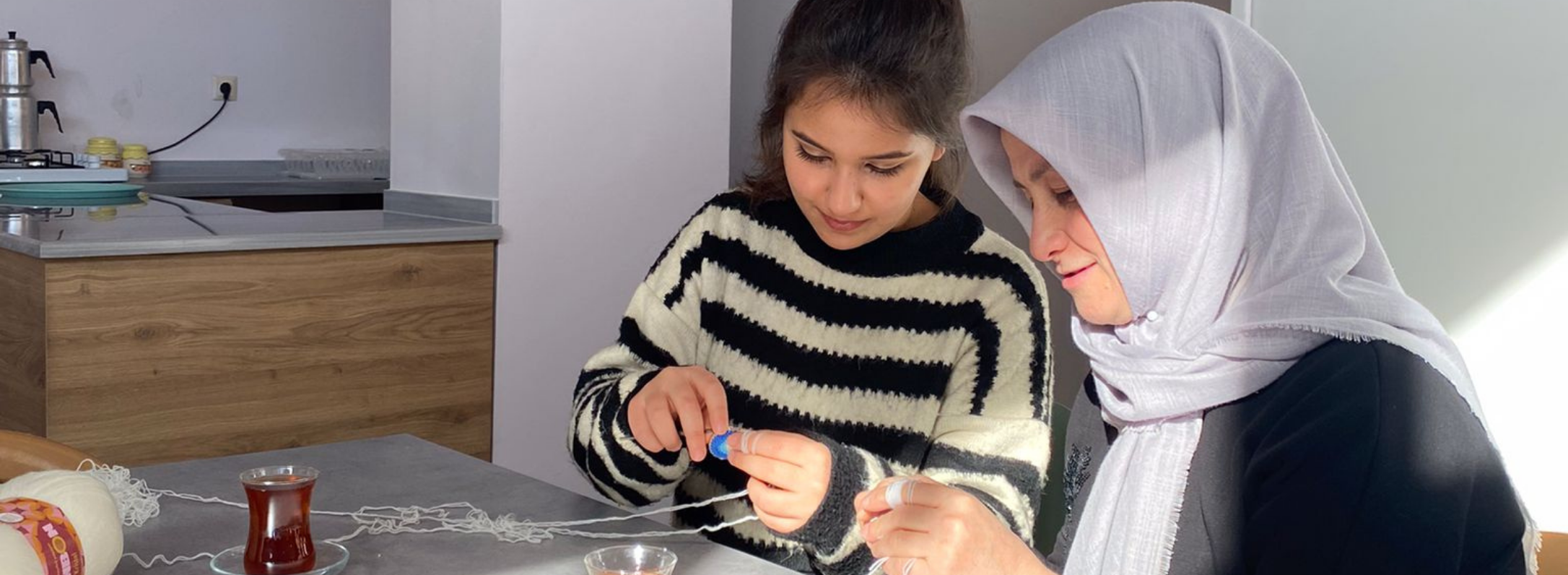
Baksı has created new livelihoods in a region long defined by migration and scarcity. Women gather in workshops to practice embroidery and weaving, reviving traditional crafts while earning income. Children come for art programs that connect them to new ideas while anchoring them in their heritage. In Koçan’s view, the museum is not just a cultural space but a way to give life back to a village that once seemed forgotten.
After the devastating earthquakes of February 6, 2023, the partnership between Turkish Philanthropy Funds and Baksı took on new urgency. Together, they created opportunities for women affected by the disaster, turning the museum’s ateliers into spaces of resilience and renewal.
That is how Nergis, a mother of two, found her way there. Widowed and struggling to make ends meet in her village, she grew vegetables, kept her expenses low, but had few ways to earn steady income. One day in Bayburt, she spotted a brochure for an embroidery workshop. Stepping into the atelier, she discovered rows of yarn in every color and women weaving side by side, laughing and working together. For her, it was more than a workshop; it was a way to rebuild her life.
Each stitch she now sews carries more than thread. It carries dignity, companionship, and hope. And in this, you can sense the enduring presence of women like Hüsamettin Koçan’s mother, whose quiet determination first shaped his path. Her spirit echoes in the stories of Nergis, Suna, Ayşe, and countless others who, at Baksı, are not just weaving textiles but creating brighter futures for themselves and their families.