
After the February 2023 earthquakes, children in Hatay lost far more than buildings and familiar surroundings. Daily routines disappeared, communities were displaced, and many of the spaces where children once learned, played, and felt secure were gone.
For girls, recovery brought another challenge. The barriers they had faced before the earthquake did not disappear with the disaster. In many cases, uncertainty, economic hardship, and disruption made the need for safe spaces, support, and opportunities to be heard even greater.
Female dropout rates spike significantly around the 5th grade. Following the destruction of school facilities during the earthquake, many families increasingly withdrew their daughters from formal education. With limited job opportunities and deepening poverty, child labor and early marriage continue to be a reality for many girls.
Through a two-year grant from the TPF Earthquake Fund, Suna'nın Kızları created two Children's Hubs in Antakya and Güzelburç where children could begin rebuilding something less visible but equally important: a sense of safety, confidence, belonging, and agency.
Şeyma was one of them.
At first, the Center was simply somewhere she could go. Over time, it became somewhere she could speak.
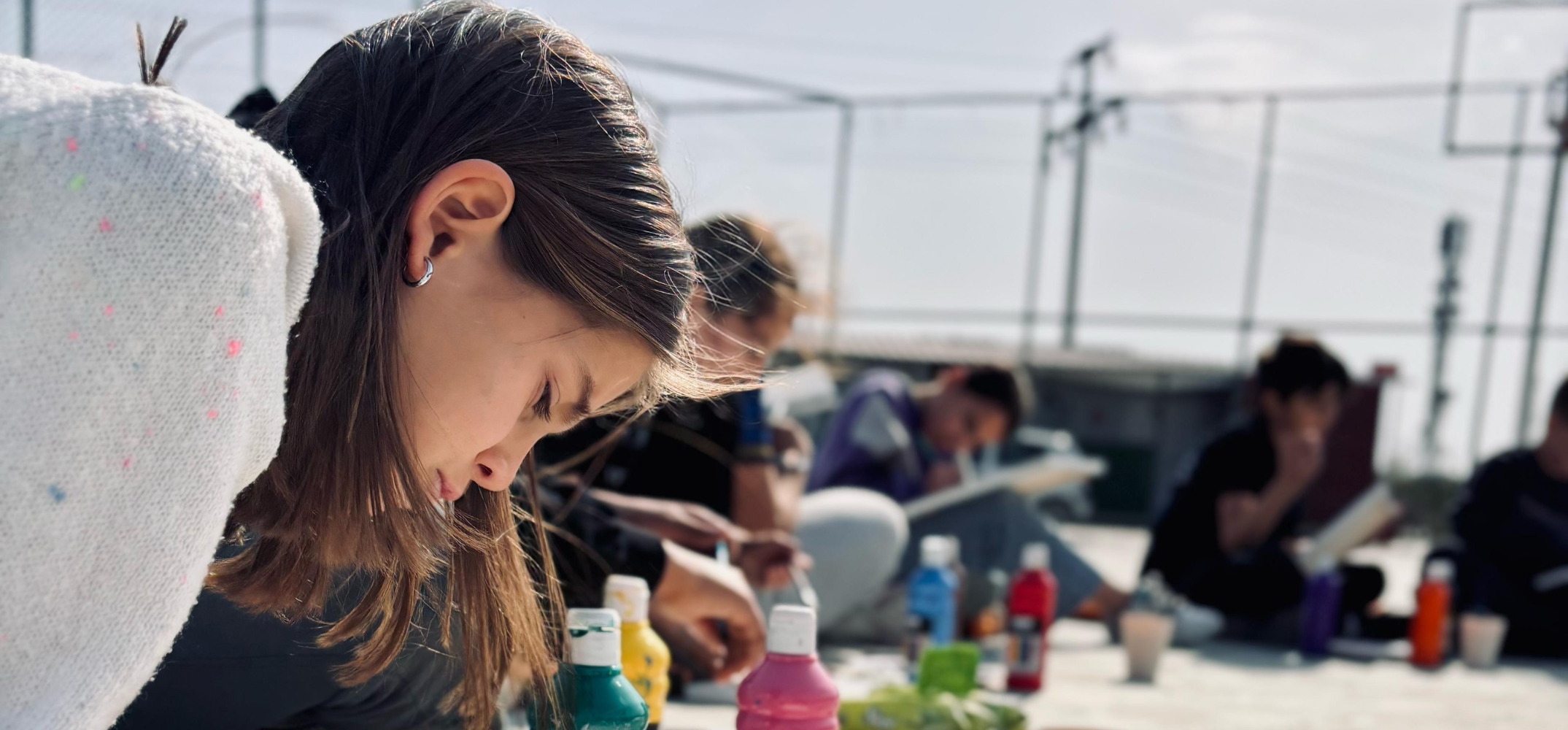
Through Girl Circles and other participatory activities, Şeyma and her peers were encouraged to think about their own lives differently. What made them feel safe? What did they need from the places around them? What would they change if someone actually asked?
The answers came from their own experiences.
They talked about hygiene, safe spaces, parks, and the everyday realities of navigating their communities as girls. They learned about their rights, explored their ideas through art, journalism, and participatory research, and began putting words to experiences they had not always been invited to express.Within the Circle, she learned to recognize herself, to stand up for her rights, to express herself, and to share her ideas freely. It was where she truly learned how to speak.
Most importantly, adults listened.
Their ideas did not remain inside the Center. Girls met with public institutions and local decision-makers, bringing their perspectives into conversations about the communities being rebuilt around them. What they built was not just confidence, but a community that is deeply connected, supportive, and unwilling to let go of one another.
For Şeyma, the transformation was personal. The Circle became a place where she learned to express herself, stand up for her rights, listen to others, and trust that her ideas had value.
But she was not doing it alone.
The girls formed friendships and a community of their own, supporting one another as they learned, questioned, created, and imagined what could come next.
Across the two-year project, the Children's Hubs registered 536 children, including 335 girls, while school-based rights seminars extended the work to more than 5,200 children. Hundreds of workshops, structured well-being programs, and more than 1,100 hours of individual psychological counseling created multiple pathways for children to recover and grow.
But perhaps one of the most important outcomes cannot be captured by a number.
In the aftermath of a disaster, children are surrounded by decisions they did not make about where they will live, where they will learn, and what their communities will become.
Through Suna'nın Kızları, girls like Şeyma experienced something different.
They were asked. They were heard. And they began to see themselves not simply as children recovering from a disaster, but as people with the ability to shape what comes next.