

By Senay Ataselim Yilmaz, PhD, Executive Director, Turkish Philanthropy Funds
Three years after the earthquakes in southern Türkiye, the central question is no longer how quickly the world responded but whether it stayed long enough.
Disaster recovery does not end when emergency aid winds down. In fact, global research shows that the most important phase often begins after attention shifts elsewhere, when communities face extended economic strain, disrupted education, and deep psychosocial impacts that cannot be addressed through short-term relief alone. Recovery, quite simply, does not follow the timeline of headlines.
Globally, research on large-scale earthquakes shows that while emergency needs peak in the first months, the deepest impacts unfold over years. Studies from China, Japan, and Haiti consistently show that economic recovery can lag by 5–10 years, particularly in regions where livelihoods, education systems, and local institutions are disrupted. Mental health outcomes often follow a similar trajectory, with trauma-related symptoms persisting well beyond the emergency phase.
Our experience at Turkish Philanthropy Funds mirrors this evidence, both in scale and in complexity.
Since February 2023, the TPF Earthquake Fund has granted $16 million, worked with 93 local NGOs, and reached 2.7 million people across earthquake-affected regions. In the first week alone, $5 million was mobilized from a global community spanning 96 countries, enabling life-saving action at speed. But speed, we learned early on, is only the beginning.
As the recovery landscape evolved, so did the nature of need.
By the end of the first year, emergency shelter and food security, critical in the early days, were no longer sufficient indicators of progress. What began to surface instead were longer-term pressures: prolonged displacement, loss of income, post-earthquake outflow of young and qualified workforce, school dropouts, deep psychosocial strain, and the growing exhaustion of local organizations expected to “carry on” with diminishing resources.
Data from our own grantmaking reflects this shift. Over time, more than 45% of TPF’s funding moved into education, psychosocial support, and mental health, while economic development and support for people with disabilities became central pillars of long-term resilience. These were not abstract choices. They were driven by continuous field engagement and learning alongside partners who were living this reality every day.
Global research reinforces why this matters. Longitudinal studies show that disaster-affected populations experience significantly higher rates of depression, anxiety, and post-traumatic stress for years after an event, often peaking after emergency aid has tapered off. Economic studies similarly demonstrate that without targeted support for livelihoods and local enterprise, communities risk long-term dependency rather than recovery.
At the same time, sector analyses show that up to 90% of philanthropic disaster funding is devoted to immediate relief, with relatively little directed toward long-term recovery and resilience, a pattern that risks leaving communities undersupported just as needs become more complex and less visible.
This is where philanthropy faces a critical inflection point.
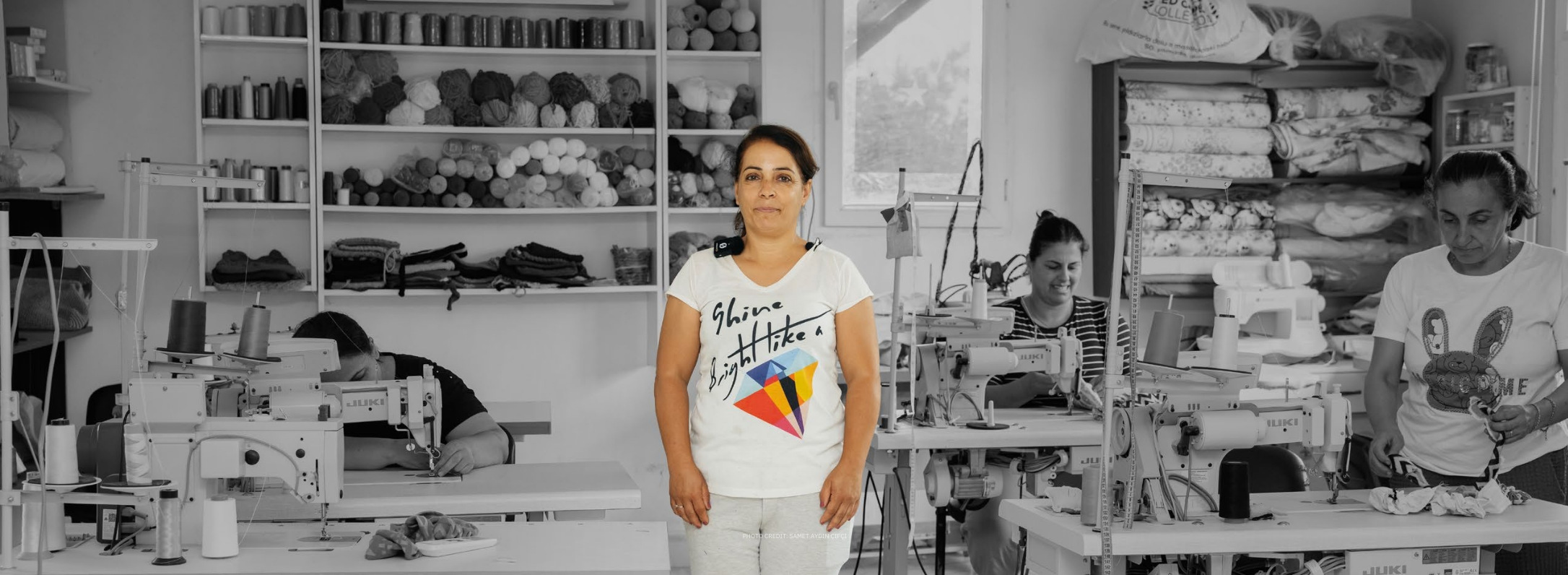
At the three-year mark, the challenge is no longer how to respond quickly, but how to stay engaged responsibly. At TPF, this has meant moving from open-ended emergency response to a more deliberate, systems-oriented strategy: what we now call “building forward.” Rather than funding isolated interventions, we prioritize initiatives that restore everyday life: teachers returning to classrooms with support, women rebuilding livelihoods through cooperatives, youth reconnecting through safe social spaces, and mental health systems that recognize trauma as a long-term condition, not a short-term crisis.
Across nearly 1,100 days of sustained engagement, this approach has allowed TPF to act not only as a grantmaker but as a steward, convener, and partner to both local organizations and global funders. It has also made one thing unmistakably clear: no organization can do this work alone.
Long-term recovery at scale requires coordination across philanthropy, research, and civil society in Türkiye—from national institutions to locally rooted organizations in affected regions. Over the past three years, TPF has increasingly positioned itself as a platform for that coordination, bringing global capital and expertise into meaningful partnership with locally led work.
One example is our collaboration with the Center for Disaster Philanthropy (CDP). As global attention and emergency funding began to fade, CDP and TPF aligned around a shared commitment to community-driven, long-term recovery. Through a co-funding model, we jointly invest in local organizations working at the intersection of mental health, education, economic empowerment, and youth resilience, reducing fragmentation and enabling partners to plan beyond short funding cycles. Equally important, we engage in shared field learning, using on-the-ground insight to inform strategy rather than distant assumptions about need.
At the same time, our partnership with Columbia Global Centers allows us to ground recovery work in rigorous, interdisciplinary knowledge. By drawing on the expertise of Columbia faculty across public health, psychology, and disaster research, we connect lived experience in the field with global evidence, strengthening how recovery programs are designed, evaluated, and adapted over time, while building greater readiness for future crises.
These collaborations reflect a broader truth: recovery that lasts is built at the intersection of local leadership, long-term, flexible funding, and credible knowledge.
This is also where the conversation must now turn toward resilience.
Three years in, communities are not only rebuilding from the last disaster, but they are asking a harder question: how to withstand the next one. Strengthening mental health systems, supporting inclusive local economies, and investing in the preparedness and capacity of local NGOs are no longer future concerns. They are present-day responsibilities.
If recovery taught us how to respond, resilience asks how we stay ready.
This anniversary is not a moment of closure. It is a marker of responsibility—to continue investing in the systems, people, and institutions that will shape the next decade. As international attention moves on, the work that remains is quieter, slower, and deeply consequential.
Communities deserve more than survival. They deserve the chance to build forward.